
Healthy, functional teeth play an essential role in your confidence, oral health, and overall well-being. Whether you have a damaged tooth due to decay or injury or you’re missing one or more teeth, choosing the right restorative treatment can significantly improve your quality of life. Modern restorative dentistry offers reliable solutions that restore both function and aesthetics, allowing you to smile, eat, and speak comfortably again.
Among the most common restorative treatments are dental crowns and dental bridges in Baldivis. While both are designed to improve damaged smiles, they serve different purposes and are recommended for different clinical situations. Understanding the differences between these two options helps you make an informed decision about your oral health.
At QVC Dental, our experienced Dentist in Baldivis carefully evaluates your oral condition, discusses your goals, and recommends the most suitable restoration to ensure long-lasting, natural-looking results.
What is a Dental Crown?
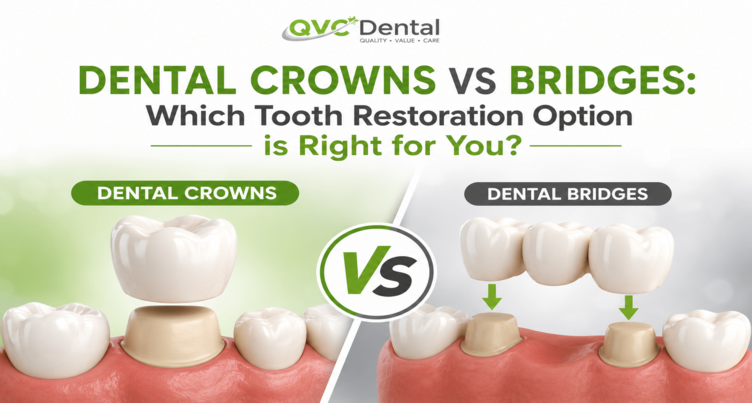
A dental crown is a custom-made cap placed over an existing tooth to restore its strength, shape, size, and appearance. Crowns completely cover the visible portion of a damaged tooth, protecting it from further wear while preserving its natural root.
Modern crowns are crafted using durable materials such as porcelain, ceramic, zirconia, or porcelain fused to metal, allowing them to blend seamlessly with your natural smile.
When is a Dental Crown Recommended?
A dental crown may be the ideal solution in several situations.
1. Cracked Teeth
Teeth with fractures or cracks often become vulnerable to further damage. A crown reinforces the tooth structure, reducing the risk of splitting.
2. Large Fillings
When a tooth has extensive decay and requires a large filling, insufficient natural tooth structure may remain. A crown provides complete protection and stability.
3. Root Canal-Treated Teeth
After root canal therapy, teeth often become more brittle. Placing a crown restores strength while protecting the treated tooth from fractures.
4. Worn or Weakened Teeth
Years of grinding, acid erosion, or trauma can significantly weaken teeth. Crowns restore both function and appearance while preventing additional damage.
Benefits of Dental Crowns
Dental crowns offer numerous long-term advantages, including:
- Restoring tooth strength and durability
- Protecting weakened or damaged teeth
- Providing a natural-looking appearance
- Improving chewing efficiency
- Preserving natural tooth structure
- Offering long-lasting performance with proper care
What is a Dental Bridge?
A dental bridge is a fixed restoration designed to replace one or more missing teeth. Rather than restoring an existing tooth, a bridge fills the gap left by missing teeth using an artificial replacement tooth called a pontic.
The bridge is securely supported by neighbouring natural teeth or dental implants.
How Dental Bridges Replace Missing Teeth
A traditional dental bridge consists of three main components:
- Two supporting crowns placed on adjacent healthy teeth.
- One or more artificial teeth positioned between them.
- Permanent cementation to restore function.
This design allows the bridge to replace missing teeth without removable dentures.
Supporting Teeth
The adjacent teeth are carefully prepared to support the bridge, ensuring stability during everyday use.
Restoring Function
Dental bridges restore your ability to chew, bite, and speak naturally while maintaining facial support.
Benefits of Dental Bridges
Patients often choose bridges because they:
- Replace one or more missing teeth.
- Restore chewing ability.
- Prevent neighbouring teeth from shifting.
- Improve smile aesthetics.
- Maintain proper bite alignment.
- Provide a fixed, comfortable solution.
Dental Crowns vs Bridges: What’s the Difference?
Although both treatments improve damaged smiles, they serve different purposes.
| Purpose | Restores a damaged tooth | Replaces missing teeth |
| Treatment Area | Covers an existing tooth | Fills gaps created by missing teeth |
| Procedure | Single tooth restoration | Multiple teeth restoration |
| Durability | 10–15+ years | 10–15 years |
| Maintenance | Normal brushing and flossing | Extra cleaning beneath the bridge |
| Best Candidates | Damaged, cracked, or weakened teeth | Patients missing one or more teeth |
Purpose
A crown strengthens and protects an existing tooth, while a bridge replaces teeth that have already been lost.
Treatment Procedure
Crowns typically require preparing one tooth before placing a custom restoration.
Bridges require preparing adjacent supporting teeth and fabricating a restoration that spans the missing tooth space.
Durability
Both restorations are highly durable when maintained properly. Material selection, oral hygiene, and bite forces all influence longevity.
Cost
Crowns generally restore one tooth, while bridges replace multiple teeth, making treatment costs dependent on complexity and the number of teeth involved.
Maintenance
Crowns require regular brushing and flossing like natural teeth.
Bridges require additional cleaning underneath the artificial tooth using floss threaders or specialised cleaning tools.
Best Candidates
Crowns are ideal for patients with damaged natural teeth.
Bridges are recommended for patients missing one or more teeth who have healthy neighbouring teeth for support.
Which Option is Right for You?
Choosing between a crown and a bridge depends on several important factors.
1. Number of Damaged or Missing Teeth
If the tooth is still present but weakened, a crown is often recommended.
If the tooth is missing completely, a bridge may provide the most suitable solution.
2. Condition of Remaining Teeth
Healthy neighbouring teeth may support a bridge, while severely damaged teeth often benefit from individual crowns.
3. Bone Support
Patients with healthy bone and surrounding tissues generally experience better long-term outcomes with restorative treatment.
4. Overall Oral Health
Healthy gums, controlled decay, and good oral hygiene contribute to successful restorations.
5. Budget Considerations
Treatment costs vary depending on the materials used and the complexity of the procedure. Our team explains every option clearly before treatment begins.
6. Long-Term Goals
Some patients prioritise preserving natural teeth, while others focus on replacing missing teeth efficiently. Personal treatment goals play an important role in selecting the right restoration.
Can Dental Crowns and Bridges Improve Your Smile?
Absolutely. Both restorations deliver significant functional and cosmetic improvements.
Functionally, they:
- Restore chewing efficiency.
- Improve speech clarity.
- Maintain proper bite alignment.
- Protect remaining teeth.
Cosmetically, they:
- Restore natural tooth shape.
- Match surrounding tooth colour.
- Improve facial appearance.
- Boost confidence when smiling.
At QVC Dental, our approach to Baldivis cosmetic dentistry combines advanced restorative techniques with artistic smile design, ensuring every restoration looks natural while performing like a healthy tooth.
How Long Do Dental Crowns and Bridges Last?
With proper care, both restorations offer excellent longevity.
Typical lifespan includes:
- Dental Crowns: 10–15 years or longer
- Dental Bridges: Approximately 10–15 years
Several factors influence lifespan, including:
- Daily oral hygiene
- Teeth grinding
- Diet
- Smoking
- Regular dental examinations
- Material quality
Routine visits with your Dentist in Baldivis allow early detection of wear and ensure your restoration continues functioning properly.
Caring for Your Dental Crowns and Bridges
Maintaining excellent oral hygiene helps maximise the lifespan of your restoration.
Daily Oral Hygiene Tips
- Brush twice daily using fluoride toothpaste.
- Floss carefully around crowns.
- Use floss threaders beneath bridges.
- Consider antibacterial mouthwash.
- Clean along the gumline thoroughly.
Foods to Avoid
Although restorations are durable, avoid:
- Ice chewing
- Hard lollies
- Popcorn kernels
- Extremely sticky foods
- Using teeth as tools
These habits reduce unnecessary stress on your restoration.
Regular Dental Check-Ups
Professional examinations allow us to:
- Check restoration stability
- Detect early decay
- Assess gum health
- Perform professional cleaning
Preventive care significantly extends restoration lifespan.
When to Replace a Crown or Bridge
Replacement may become necessary if you notice:
- Loose restorations
- Persistent discomfort
- Cracks or chips
- Gum recession
- Visible wear
- Recurrent decay around margins
Prompt evaluation prevents more extensive dental problems.
Why Choose QVC Dental for Tooth Restoration?
Choosing the right dental provider is equally as important as choosing the right treatment.
At QVC Dental, we combine clinical expertise with patient-focused care to deliver predictable, long-lasting restorative outcomes.
Our patients benefit from:
- Experienced restorative dental team.
- Modern digital diagnostic technology.
- Personalised treatment planning.
- Premium-quality crown and bridge materials.
- Comfortable, gentle patient experience.
- Trusted Dentist in Baldivis committed to exceptional care.
Every treatment plan is customized to restore function, improve aesthetics, and support your long-term oral health.
Conclusion
Both dental crowns and dental bridges are highly effective restorative treatments that improve oral function, protect your remaining teeth, and enhance the appearance of your smile. While crowns are designed to restore and strengthen damaged natural teeth, bridges replace one or more missing teeth, helping you regain confidence and everyday comfort.
The right treatment depends on your unique oral health needs, the condition of your teeth, and your long-term goals. A professional dental assessment ensures you receive the most suitable and durable solution for your smile.
If you’re considering dental crowns, dental bridges, or other restorative treatments, book a consultation with QVC Dental today. Our experienced Dentist in Baldivis will provide a comprehensive evaluation, explain your treatment options, and create a personalised plan to restore your smile with confidence.
Frequently Asked Questions
Is a dental crown stronger than a dental bridge?
A dental crown strengthens and protects a single damaged tooth, making it highly durable. A bridge is also strong but relies on supporting teeth for stability. Both provide excellent strength when properly designed and maintained.
Which option lasts longer, crowns or bridges?
Both crowns and bridges commonly last between 10 and 15 years or longer with excellent oral hygiene, regular professional care, and high-quality materials.
Can I replace a missing tooth with only a crown?
No. A crown requires an existing natural tooth or dental implant for support. If a tooth is missing, a dental bridge or dental implant is generally recommended.
Are dental crowns painful?
The procedure is performed under local anaesthetic, making treatment comfortable. Mild sensitivity after placement usually resolves within a few days.
How much do crowns and bridges cost?
Treatment costs vary depending on the materials selected, the number of teeth involved, and the complexity of treatment. A comprehensive consultation provides an accurate treatment estimate.
How do I know which treatment is right for me?
The best option depends on your tooth condition, number of missing teeth, gum health, bite, and long-term goals. An experienced Dentist in Baldivis will evaluate your smile and recommend the most appropriate solution.